Opium addiction
The LuminariesOpium addiction is not treated as a private habit alone: it links Anna Wetherell and Emery Staines to the den at Kaniere Chinatown, draws Joseph Pritchard and Ah Sook into a dispute over a near-fatal overdose, and gives Quee Long’s refusal of the drug a political as well as personal meaning. Its effects shape memory, health, trust, and confinement, while the differing explanations of Anna’s collapse leave open the question of how much agency she had over what happened to her.
Supply, habit, and suspicion
Anna is an established opium user before the central events. She takes the drug frequently, visits Ah Sook at the Kaniere den, and is known there as a regular companion. She tells Aubert Gascoigne that her employer, Dick Mannering, does not provide opium, although he knows she takes it; she identifies Ah Sook as her supplier. The distinction matters: her dependence is supported by an ongoing supply network, rather than being presented as an isolated act of consumption.
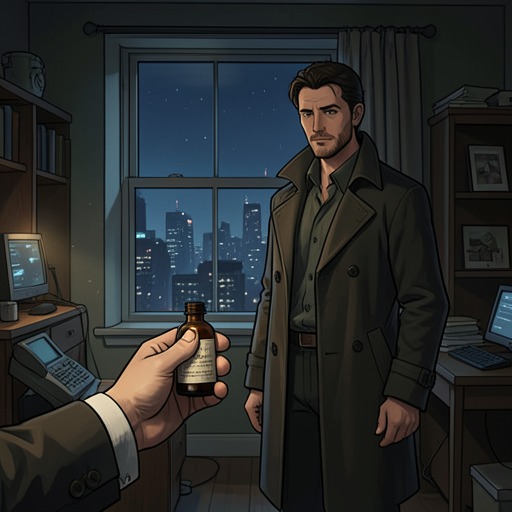
On 14 January, Anna leaves Emery Staines’s house during the night to smoke a pipe. She later remembers lighting it, but not what followed until she wakes in custody in daylight. Her account places the beginning of a twelve-hour gap around the pipe, but does not explain how she came to take enough opium to remain unconscious for so long. Pritchard, who supplies the West Coast dens south of the Grey River, doubts that her collapse was an ordinary consequence of her habitual use. He considers whether she was given the drug against her will or whether the supply had been altered to harm her. When Ah Sook refuses his request for the remaining resin so it can be examined, Pritchard’s professional curiosity remains unsatisfied.
The uncertainty is sharpened by the contrast between Anna’s familiar tolerance and the severity of this episode. Pritchard has never known her to lose consciousness for more than twelve hours and doubts the collapse was accidental. He believes her statement that she did not intend to die, but also considers the possibility that she is concealing the truth to protect someone. A physician’s confirmation that she had taken a great deal of opium, together with the fact that she had been observed while detained, makes deliberate feigning seem unlikely to him. These are Pritchard’s deductions, not a settled account of how the overdose occurred.
Anna and Ah Sook
Anna’s dependence is also a relationship. She often visits Ah Sook after smoking, and he is distressed when he hears that she nearly died. He doubts that her ordinary tolerance could explain such prolonged unconsciousness and suspects that Pritchard’s latest shipment was poisoned. His concern prompts him to return to Hokitika and question Thomas Balfour about the supply chain. Balfour’s answer connects Pritchard’s business to Francis Carver, whom Ah Sook recognizes from an earlier life; the exchange turns his worry for Anna into a new source of suspicion about Carver.
The relationship does not make Ah Sook’s role uncomplicated. He sells Anna opium, and she is one of the visitors whose use sustains the den. Yet the novel distinguishes his alarm at the overdose from the ordinary business of supply: he rejects the claim that he poisoned her and treats the allegation as a grave affront. When Mannering later accuses him of poisoning Anna every day, the charge collapses two different claims—the specific suspicion about the dose that caused her collapse and the broader harm of supplying an addictive drug. Ah Sook denies the first; the scene does not erase his role in the second.
Anna’s absence from the den becomes meaningful in its own right. More than a month after 14 January, she has not returned to share a pipe or replenish her supply, although the half-ounce of resin Ah Sook gave her that afternoon would ordinarily have lasted around two weeks. He waits for her and cannot tell whether she has stopped using opium or found another supplier. The possibility that she has quit troubles him most, a reversal that shows how dependence has organized their companionship: he misses her visits even while believing the drug has brought her close to death.
Quee Long’s refusal
Quee Long’s position offers a counterpoint to the den’s business and to Anna’s dependence. He refuses opium and will not allow it in his presence or in the lives of people he loves. His father, Quee Zuang, died defending China against Britain’s demands; Quee Long sees the drug as a sign of Western violence and contempt for Chinese life. This history informs his rejection, which is not simply an individual preference but a judgement about the imperial relations attached to the trade.
The contradiction between principle and circumstance remains visible. Quee Long works for a British-owned firm in New Zealand and profits from conditions his father had opposed. He does not treat Anna as he would a Chinese user: she visits him after smoking, and he tolerates her presence, though he tells himself that he would knock the pipe from her hand if she produced it before him. His stance thus combines a firm prohibition with an exception shaped by attachment, and with an uneasy sense that her suffering has somehow been answered by a larger justice. His refusal gives the novel a perspective in which opium is not only a source of individual harm but a historical instrument of domination.
Staines and dependence in custody
Staines’s dependence begins on the same night Anna loses her memory of events. After spending time with her and trying her pipe, he experiences an immediate desire to use the drug again. He goes to Kaniere Chinatown early the next morning, and says he wanted another taste rather than thinking about Anna when he awoke and found her gone. He recalls staying there for about a fortnight, though the days had blurred together. Ah Sook takes him in, feeds him carefully, and records his debts on a small chalkboard. The den is therefore both a place of supply and, for Staines, a temporary source of shelter and routine.
Staines later describes his absence from Hokitika as extending over two months, much of it spent under opium’s effects, though his recollection is uncertain. When found at Crosbie Wells’s former cottage, he says he had been looking for the gold he had hidden but could not remember where it was. His account connects dependence to practical disorientation and impaired recall: the missing time obscures not only his movements but the whereabouts of the fortune he sought. He identifies 14 January—the night Crosbie Wells died—as the first time he took opium.
After Anna and Staines reunite, both remain in custody while facing separate legal proceedings. Anna cannot pay her eight-pound bail; Staines, whose bail is one pound and one shilling, chooses to remain with her rather than leave custody. Their recovery is therefore entangled with confinement and with one another’s circumstances, rather than unfolding in an independent treatment setting.
Treatment and narrative significance
Dr. Gillies prescribes decreasing doses of laudanum to wean Anna from opium, warning her that surviving another collapse cannot be taken for granted. He prescribes the same staged reduction for Staines, though in his case the treatment also addresses his recovering shoulder wound. Each night Cowell Devlin brings the medicine and supervises them as they take measured doses mixed with sugar, sometimes with sweet sherry, to soften the bitter taste. The shared routine makes treatment a controlled daily practice, administered by a chaplain under a physician’s instructions.
Their responses differ. Anna dislikes the daily dose, while Staines develops a strong thirst for it; both become drowsy soon after taking it. In the weeks after their reunion, Anna’s appearance and health improve, and the physician notes the change. The evidence establishes that the taper begins and that her condition improves, but it does not present recovery as a simple or identical process for the pair. Addiction remains bound to the events that brought them together, to the uncertainty around Anna’s overdose, and to the long interval Staines cannot clearly remember.
By distributing opium’s effects across users, suppliers, caretakers, and critics, the novel resists a single moral explanation. Dependence can be a daily habit, a sudden loss of time, a business relation, a source of companionship, or a wound carried through colonial history. The competing accounts of Anna’s collapse remain consequential precisely because the drug’s damage is clear while its immediate cause is not.